Jigsaw puzzles have quietly become one of the most popular ways for adults to unwind. They ask for focus without pressure, they suit an afternoon or a slow week, and they give a real sense of completion. The trick to enjoying them is choosing the right puzzle for your time and space, and a few people pick badly the first time and put themselves off. A little thought up front avoids that.
Match the piece count to your patience
Piece count is the single biggest factor in how a puzzle feels. As a rough guide:
- 300 to 500 pieces. A relaxed evening or two. Ideal for newcomers or casual sessions.
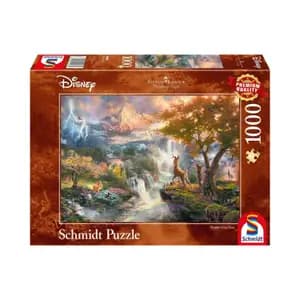
- 1000 pieces. The classic adult size. Enough challenge to feel satisfying, finishable over a few sittings.
- 1500 to 2000 pieces. A proper project that may live on the table for a week or more.
- 3000 pieces and up. For dedicated puzzlers with the space and time to commit.
If you are unsure, 1000 pieces is the safest starting point. It is challenging without becoming a chore.
Check the finished size before you buy
People often forget that more pieces means a bigger finished puzzle, and that catches them out. A 1000-piece puzzle is usually around 70 by 50 centimetres, while a 2000-piece puzzle can be a metre wide. Before you buy, measure the table or board you plan to use and check the box for the assembled dimensions. There is nothing worse than reaching the last hundred pieces and running out of room. If your space is tight, a smaller piece count or a roll-up mat solves the problem.
Think about the image, not just the size
Two 1000-piece puzzles can feel completely different depending on the picture. Images with lots of distinct areas, such as buildings, signs and varied colours, are easier to sort and assemble. Large areas of one colour, such as clear skies or open water, are much harder because every piece looks similar. Choose an image that matches the difficulty you are after, not only the piece count.
If you would like a clear walk-through of the different sizes, this video is a helpful watch:
Why brand quality matters
A cheap puzzle and a quality puzzle can look identical in the box, but the experience is very different. Better brands offer:
- A snug, satisfying fit so finished sections hold together when you move them.
- Minimal puzzle dust from clean cutting.
- A matte finish that reduces glare under lamplight.
- Strong board that survives being assembled many times.
Established names such as Ravensburger and Gibsons have earned their reputation for exactly these reasons. If you plan to puzzle often, quality pays for itself.